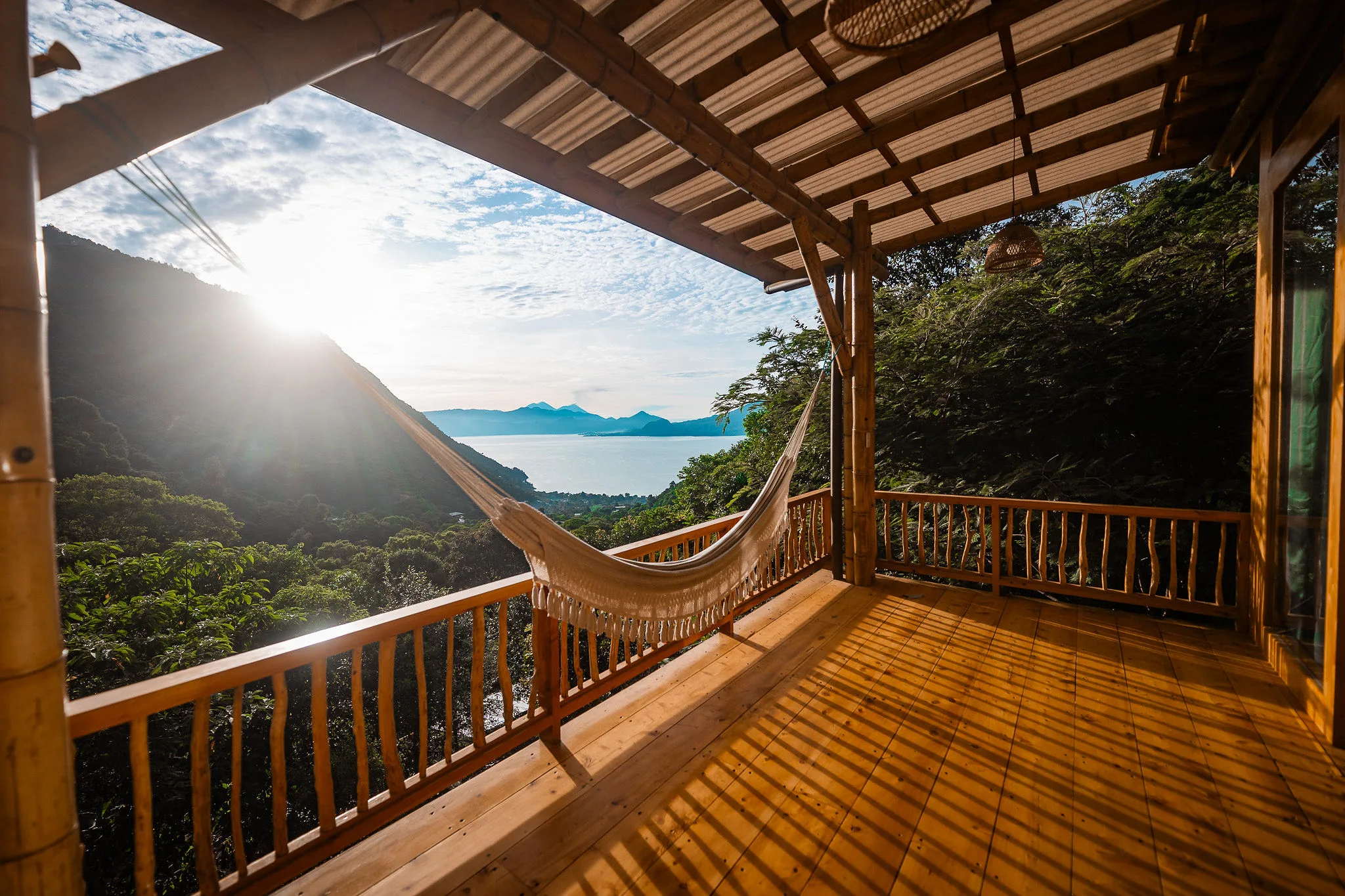
Tzununá, Lake Atitlán, Guatemala
WuWei Village
A cooperatively owned community and retreat property on 2.5 hectares of forested land. Three dwellings built. Four years of agroforestry. The next phase of the masterplan in active development with Atitlán Build.
A project rooted in place
WuWei Village is a cooperatively owned community and retreat property on 2.5 hectares of lush, forested land in the Valley of Tzununá. The project was founded by Silvère Joly and Monica Carr with a vision of regenerative living that integrates land stewardship, community, spirituality, and creativity. Over the last four years the cooperative has built three dwellings, including Casa Orquídea, and has developed an active syntropic agroforestry practice on the land. A community-supported agriculture distribution network is coming online next.
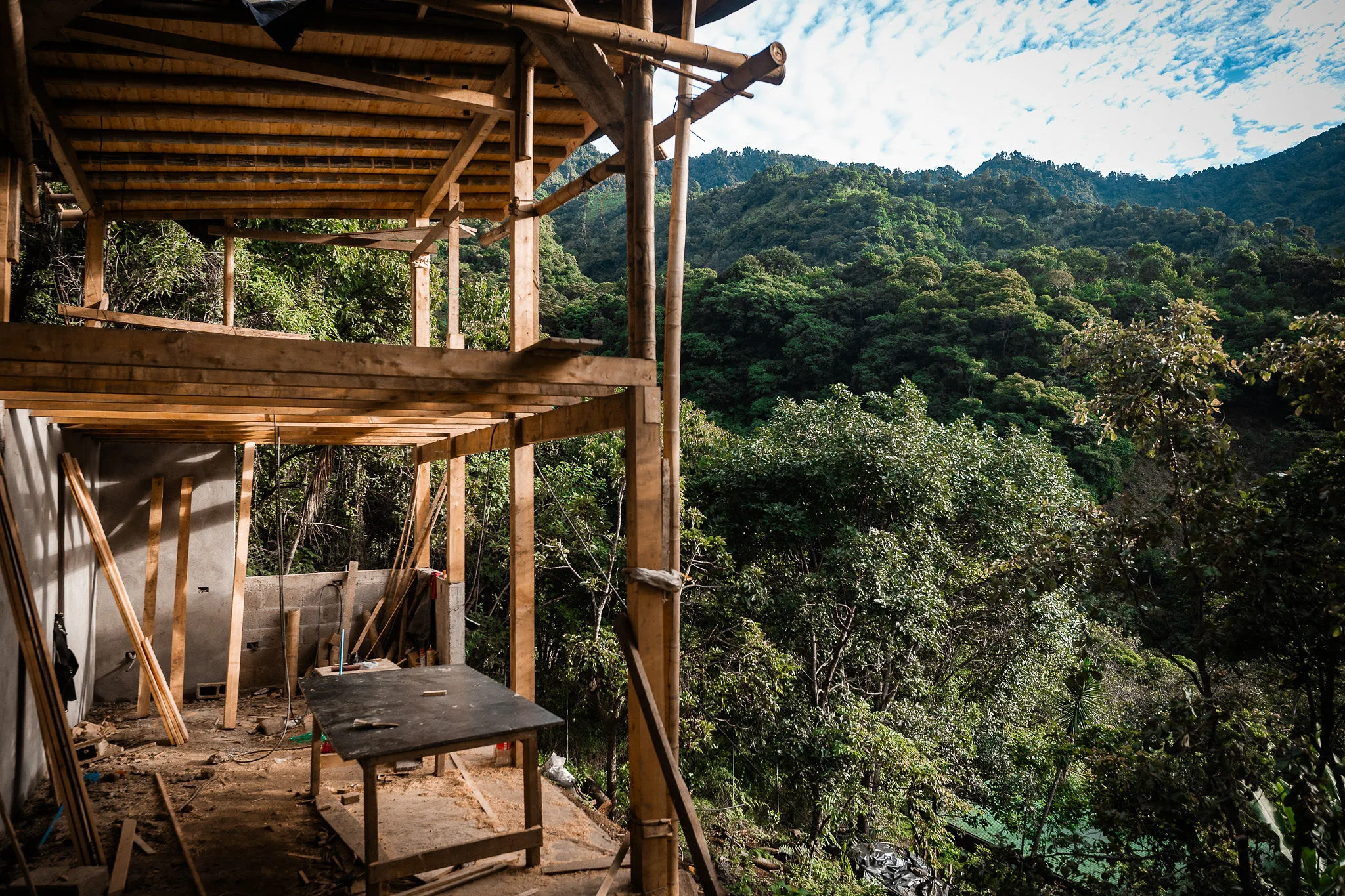
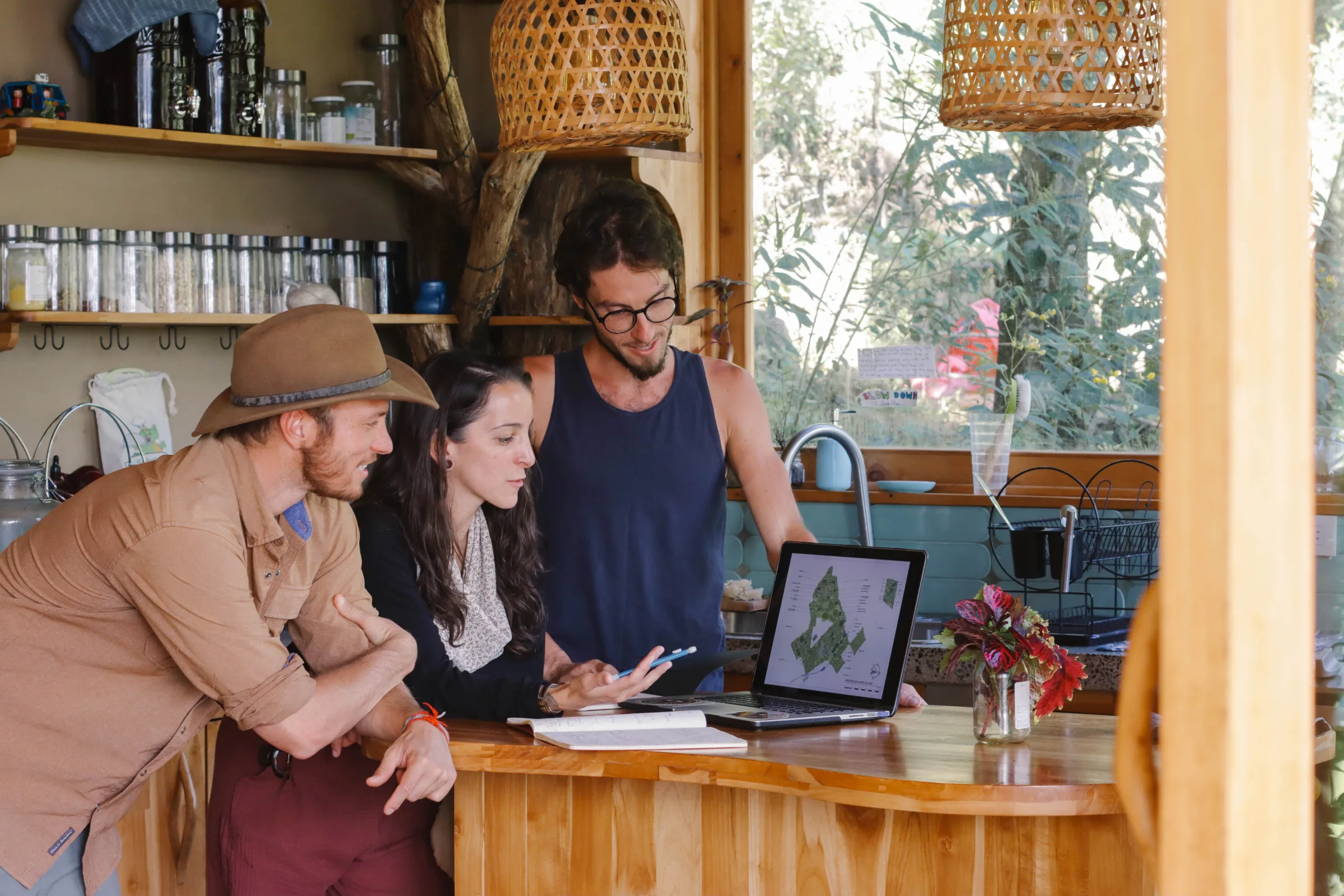
The project's masterplan was developed working with a professional architect and holding several design charrettes that engaged founders, advisors, and community. Stefan Bird, founder of Atitlán Build, was a real estate advisor and investor in the project from early on and led a few of the charrettes. The masterplan that emerged anticipates a regenerative retreat development with cooperative residences, shared community infrastructure, and dedicated short-stay capacity for visiting guests.
The masterplan
The WuWei Village masterplan. 2.5 hectares of cooperative residences, shared infrastructure, short-stay cabins, public terraces, and a network of pools fed by the waterfalls and ponds that run through the property.
The masterplan covers the full 2.5 hectares and is organized into three integrated parts: residential, public, and regenerative farming. Each part is woven into the others and yet separated by clear natural boundaries. The residences sit within the producing food forest. The retreat amenities and the farm share the same paths. The agroforestry runs continuously across the land.
Residential
The cooperative residences include three completed homes and additional one-, two-, and three-bedroom dwellings planned across the next phases. Below the dwellings are the spaces that make the residential cluster a community: a communal kitchen, a shala, a sauna, terraces, a lawn, and a playground.
Public
Two layers. The retreat center anchors the public program with a shala, an art and maker space, a restaurant, a natural pool, a riverside spa with a cold plunge, a store, a large lawn and playground, and a tree-top course along the canopy. Guest accommodations sit alongside the retreat program: high-end Airbnb cabins overlooking the river and the Hobbit Village, a community-character cluster of short-stay dwellings in the southwest of the property.
Regenerative farming
A high-diversity, productive agroforestry system runs through the entire landscape, integrated with every other use rather than fenced off from them. Dedicated vegetable garden operations support the kitchen, the restaurant, and the community-supported agriculture distribution coming online next.
Four years of agroforestry
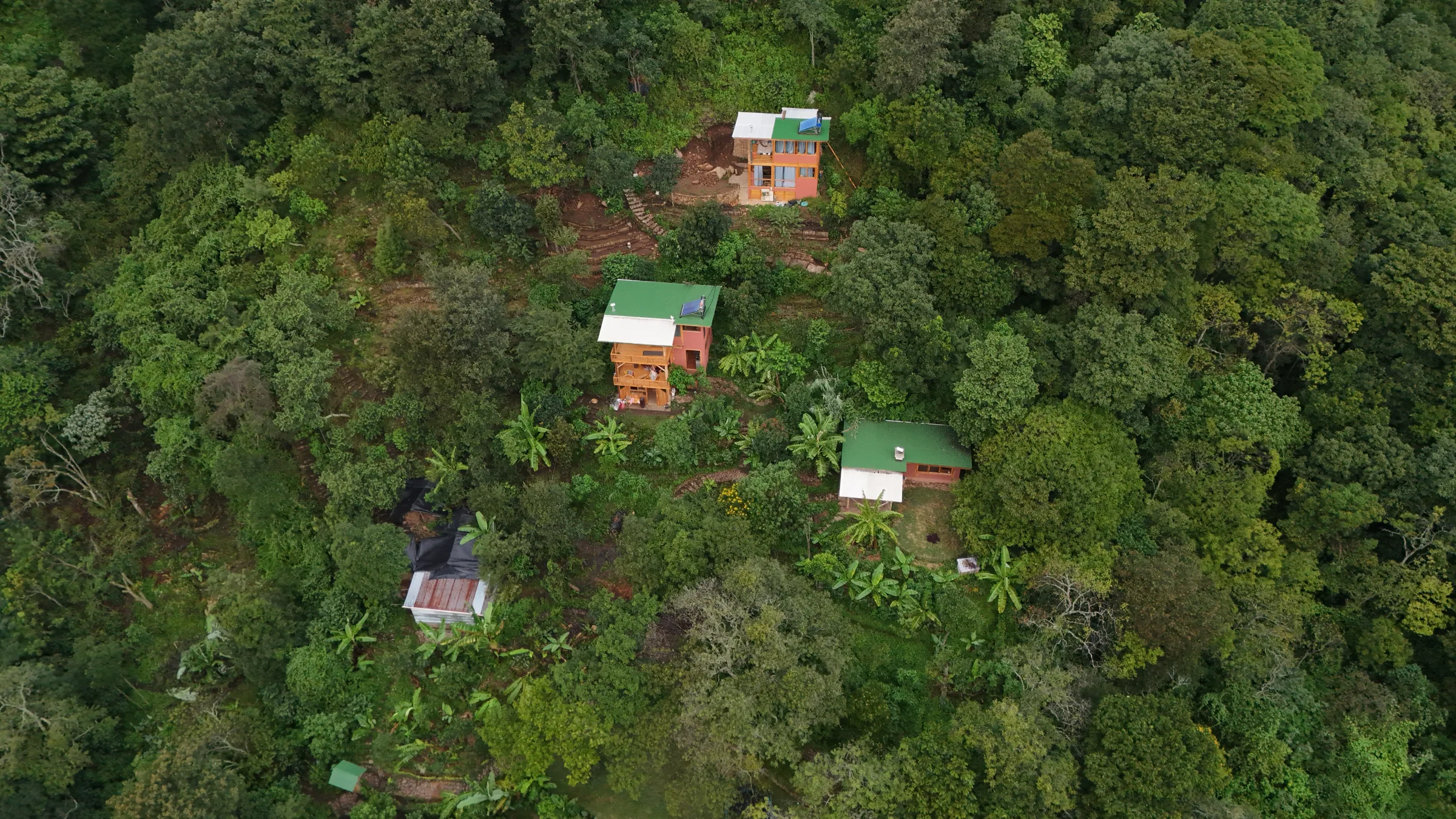
The land at WuWei is not just where the buildings sit. It is its own working system. Over four years, the cooperative has developed a syntropic agroforestry practice that integrates a high diversity of tropical, subtropical, and Mediterranean trees, vegetable beds, and ground cover into a continuous productive landscape. The buildings rise within that landscape, not in clearings cut into it. The trees that surround Casa Orquídea and the other dwellings were planted as the homes were built. The producing forest and the residences came up together.
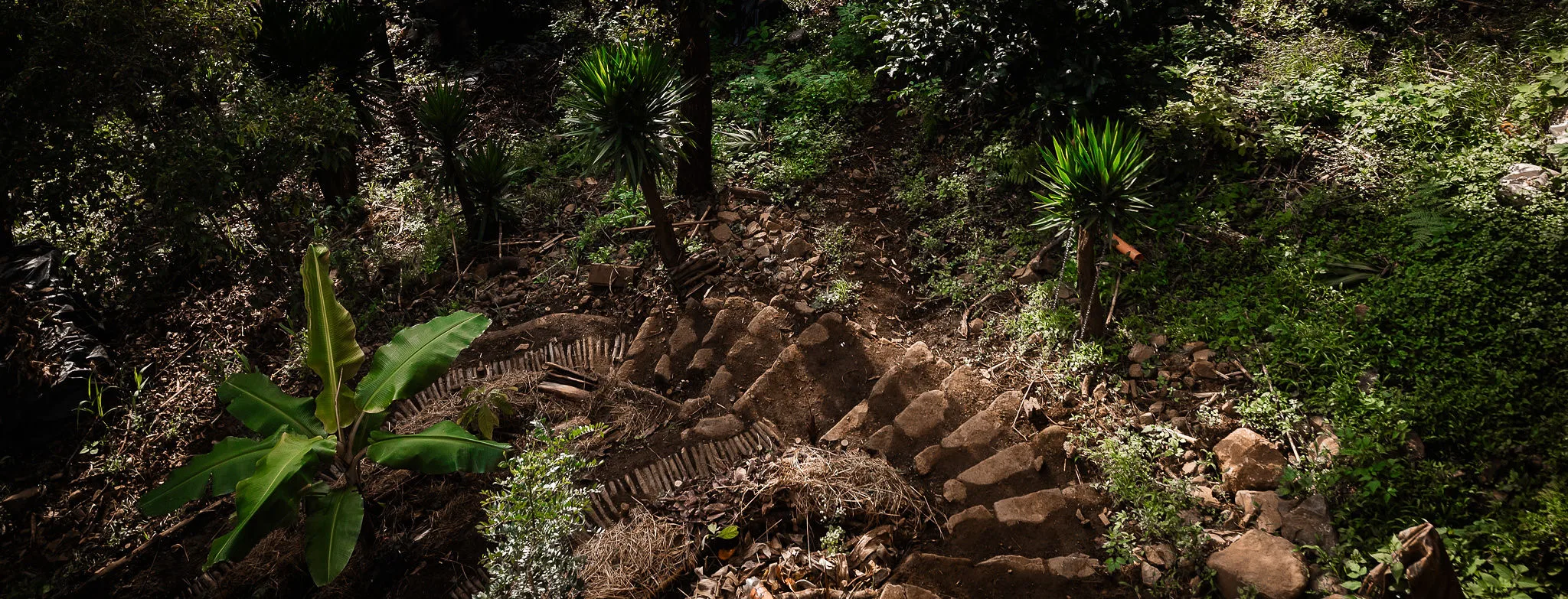
A community-supported agriculture distribution network is coming online next, taking food produced on the land out to subscribers in the surrounding villages. Agroforestry is no longer just a private practice. It is becoming productive infrastructure for the area.
The next phase
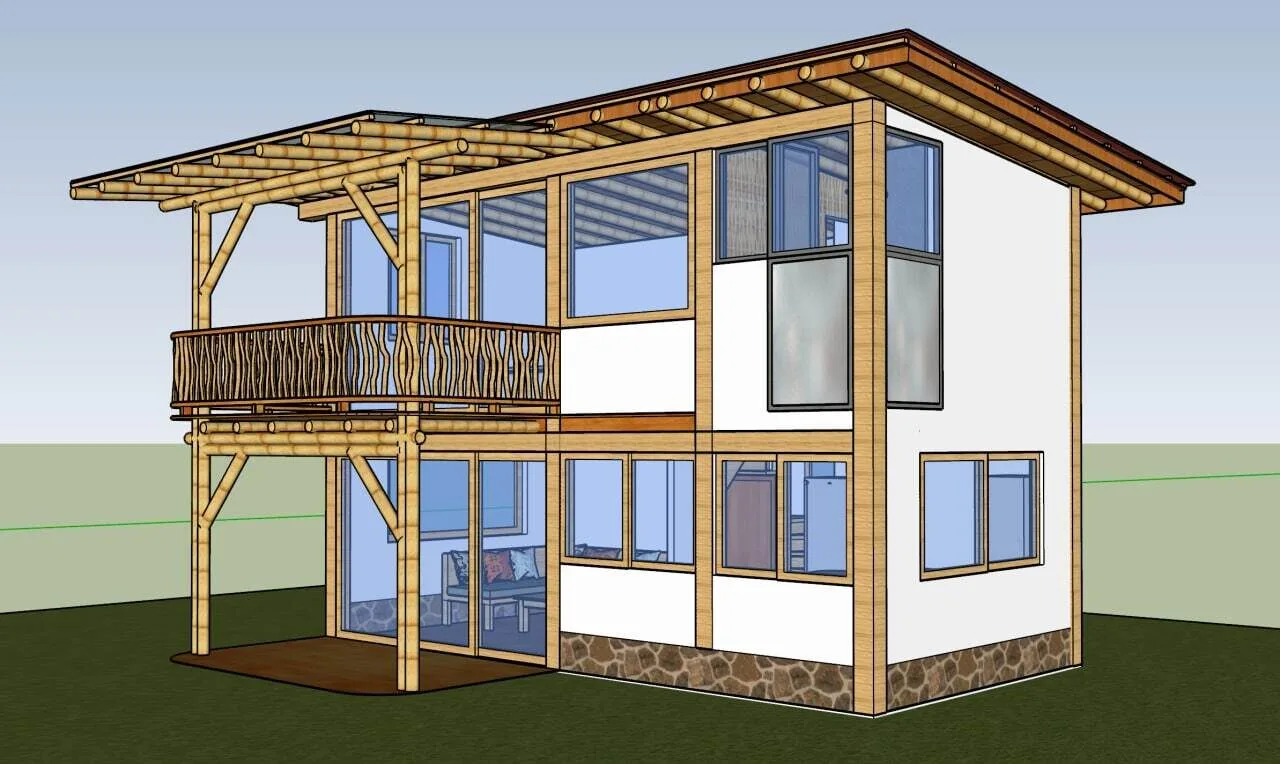
Atitlán Build is leading design and construction management for the next phase of the masterplan. The active scope includes four Airbnb cabins (ABNB 1–4 on the masterplan), a river pool fed by the natural waterfall system, a sauna (temazcal), and the public terrace and circulation network that connects them. Beyond the cabin phase, the masterplan continues with the Hobbit Village, the shala, the additional residential dwellings, the communal kitchen, the store and restaurant, and the farm and workshop work area. Atitlán Build will be the builder for the remainder of the masterplan as the project moves forward.
How we are involved
Stefan Bird's involvement with WuWei spans both an advisory phase and a construction phase. He has advised the cooperative on real estate and capital strategy since early in the project. With the next phase, Atitlán Build is now taking over design and construction management. The advisory and construction relationships are complementary to an integrated project delivery approach. Atitlán Build's first service is planning and development advisory, and the second is design-build delivery. WuWei is a project where the firm carries both.
A community, not a development
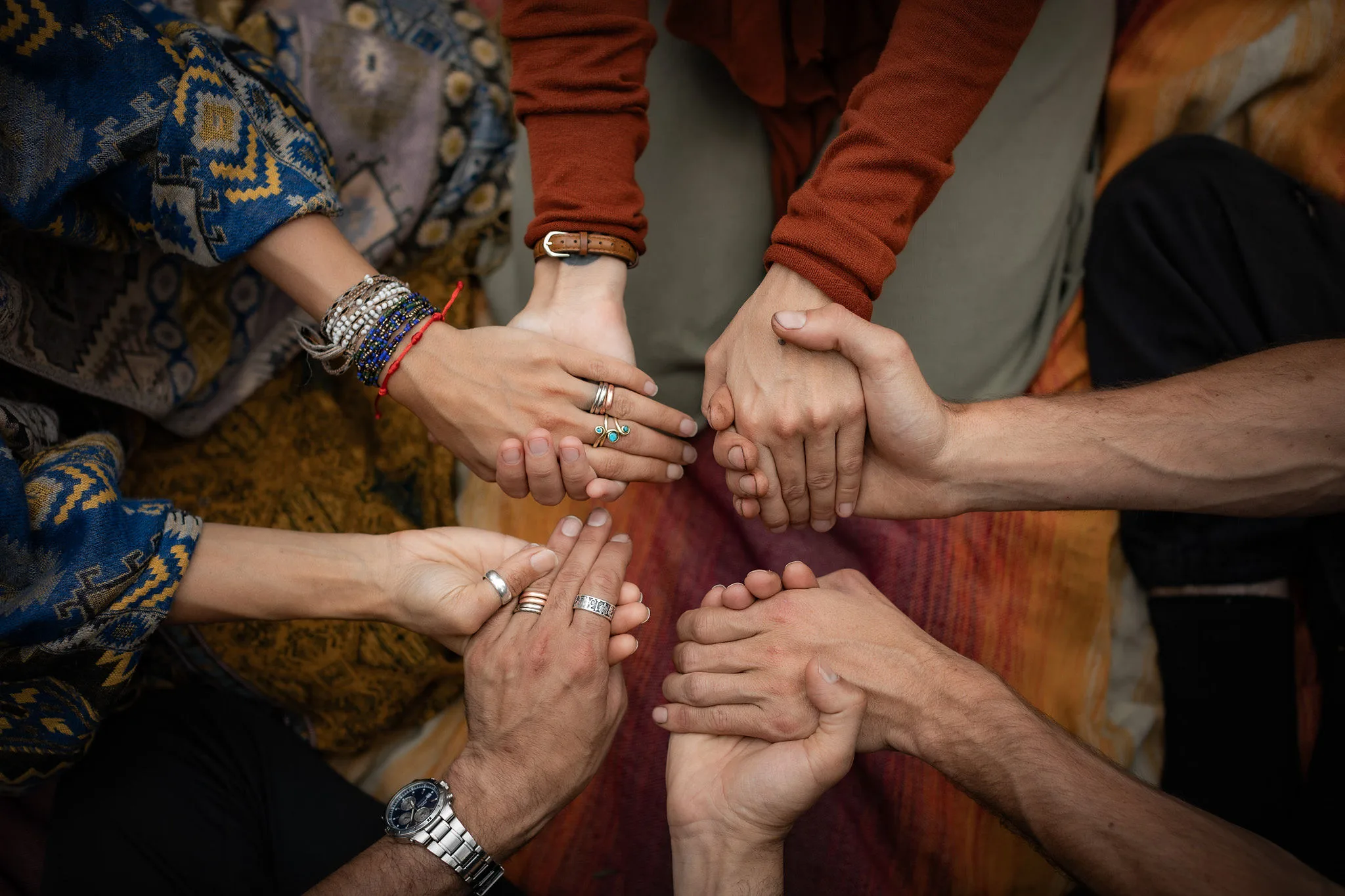
WuWei is a cooperative, not a property development. The founders are residents. The members are residents. The visiting guests stay in homes that other people live in the rest of the year. The work happens with the land, not on it. The buildings, the gardens, the paths, and the daily rhythms have been shaped together by the people who call this place home.
Investment opportunity
The next phase of WuWei Village is currently open to investment. Capital raised funds the construction of the four cabins and supporting amenities, which the cooperative will operate as short-stay accommodations alongside the retreat program. There are also opportunities for investing in the construction of new residential homes. The investment opportunity is structured for investors who are aligned with the project's regenerative and cooperative vision.
If you are interested in learning more about the investment opportunity, contact us and we will share the deal materials and discuss terms privately.
Learn more about WuWei Village
Visit wuweivillage.com to read more about the community, the founding team, the agroforestry practice, and the cooperative ownership model directly from the WuWei founders. Their site is the primary source for the project's vision, programming, and visitor information.
wuweivillage.com →